Best Agencies for MBBS Admission in Uzbekistan
Pursuing an MBBS degree in Uzbekistan has become an increasingly popular choice for international students, particularly from India, Pakistan, Bangladesh, and other Asian countries. The combination of affordable tuition fees, globally recognized medical universities, and quality education makes Uzbekistan an attractive destination for aspiring doctors. However, navigating the admission process can be challenging, which is where reliable admission consultants and agencies come into play.
Why Choose Uzbekistan for MBBS?
Before diving into the best agencies, let’s understand why Uzbekistan is gaining tremendous traction among medical aspirants worldwide:
Affordable Education: Tuition fees range from $3,000 to $4,500 per year, significantly lower than private medical colleges in India (₹15-25 lakhs per year), Europe ($15,000-40,000 per year), or universities in the USA ($30,000-60,000 per year). The total cost of completing a 6-year MBBS degree in Uzbekistan is approximately $20,000-$30,000, including tuition and living expenses.
No Entrance Exams for Admission: Most universities in Uzbekistan don’t require entrance examination scores for admission, making the process straightforward. However, Indian students must qualify NEET with minimum eligibility marks to practice in India after graduation, as per NMC guidelines.
English Medium Instruction: Many medical universities offer MBBS programs in English, eliminating language barriers for international students. Some universities also offer Russian medium courses with English language support.
WHO and NMC Recognition: Universities are recognized by the World Health Organization (WHO), listed in the National Medical Commission (NMC) directory (formerly MCI), and recognized by medical councils in various countries, allowing graduates to practice globally after clearing respective licensing exams.
Quality Education with Modern Infrastructure: Uzbekistan’s medical universities follow international curricula with modern infrastructure, well-equipped laboratories, advanced simulation centers, and experienced faculty members who have trained internationally.
Safe and Welcoming Environment: Uzbekistan is known for its hospitality, low crime rates, and safe environment for international students. The country has a diverse student community from over 50 countries.
Rich Cultural Heritage: Students get to experience the ancient Silk Road cities like Samarkand, Bukhara, and Khiva, offering a unique cultural immersion alongside quality medical education.
Clinical Exposure: Medical universities in Uzbekistan provide extensive clinical training in associated hospitals with diverse patient cases, giving students hands-on experience from the third year onwards.
Understanding the MBBS Program Structure in Uzbekistan
The MBBS program in Uzbekistan typically follows this structure:
Duration: 5-6 years (depending on the university)
- Years 1-2: Pre-clinical subjects (Anatomy, Physiology, Biochemistry, Histology)
- Years 3-4: Para-clinical subjects (Pathology, Microbiology, Pharmacology, Forensic Medicine)
- Years 5-6: Clinical subjects and rotations (Medicine, Surgery, Pediatrics, Obstetrics & Gynecology, ENT, Ophthalmology)
Medium of Instruction: English or Russian (with English support)
Clinical Training: Conducted in multi-specialty hospitals affiliated with universities
Examination System: Semester-based with continuous assessment and final examinations
Degree Awarded: MD (Doctor of Medicine) – equivalent to MBBS in India
Top Medical Universities in Uzbekistan
1. Tashkent Medical Academy (TMA)
- Established: 1919
- Location: Tashkent (capital city)
- Recognition: WHO, NMC, FAIMER
- Annual Tuition: $4,000-$4,500
- Highlights: One of the oldest and most prestigious medical institutions in Central Asia with over 100 years of history, state-of-the-art facilities, and excellent faculty
2. Andijan State Medical Institute (ASMI)
- Established: 1955
- Location: Andijan
- Recognition: WHO, NMC
- Annual Tuition: $3,500-$4,000
- Highlights: Known for excellent infrastructure, modern laboratories, experienced faculty, and strong clinical training programs
3. Samarkand State Medical Institute
- Established: 1930
- Location: Samarkand (historic Silk Road city)
- Recognition: WHO, NMC
- Annual Tuition: $3,200-$3,800
- Highlights: Located in a UNESCO World Heritage city, offers quality medical education with modern facilities and diverse patient exposure
4. Bukhara State Medical Institute (BSMI)
- Established: 1990
- Location: Bukhara
- Recognition: WHO, NMC
- Annual Tuition: $3,000-$3,500
- Highlights: Comprehensive MBBS programs with well-equipped laboratories, digital classrooms, and attached hospitals for clinical training
5. Fergana Medical Institute of Public Health
- Established: 1992
- Location: Fergana
- Recognition: WHO, NMC
- Annual Tuition: $3,500-$4,000
- Highlights: Features modern infrastructure, advanced medical equipment, and strong focus on practical training
6. Tashkent Pediatric Medical Institute
- Established: 1972
- Location: Tashkent
- Recognition: WHO, NMC
- Annual Tuition: $4,000-$4,500
- Highlights: Specialized in pediatrics but offers comprehensive general medical education with excellent clinical facilities
7. Urgench Branch of Tashkent Medical Academy
- Established: 2006
- Location: Urgench
- Recognition: WHO, NMC
- Annual Tuition: $3,500-$4,000
- Highlights: Modern campus, quality education at affordable costs, good student-faculty ratio
How to Verify an Agency's Credibility
To ensure you’re working with a legitimate agency:
- Check their physical office address and visit if possible
- Verify their registration and certifications
- Ask for references from previous students
- Ensure they provide official university documents and admission letters
- Be cautious of agencies demanding full payment upfront
- Cross-check university information on official websites
Typical Admission Process
Understanding the general admission process helps you work better with your chosen agency:
- Initial Consultation: Discuss your preferences, budget, and eligibility
- University Selection: Choose from recommended universities
- Document Preparation: Gather required documents (academic certificates, passport, photographs, medical reports)
- Application Submission: Agency submits your application to the university
- Admission Letter: Receive provisional admission letter from the university
- Visa Processing: Apply for student visa with agency assistance
- Pre-departure Preparation: Attend orientation sessions, book flights
- Arrival in Uzbekistan: Agency coordinates airport pickup and university reporting
Cost Breakdown
When working with an agency, be aware of all costs involved:
- Agency Fees: Varies between agencies, typically $500-$2,000
- University Tuition: $3,000-$4,500 per year
- Hostel Fees: $400-$800 per year
- Visa Fees: Approximately $150-$200
- Travel Expenses: Flight tickets and initial settling costs
- Living Expenses: $100-$200 per month
Red Flags to Watch Out For
Be cautious of agencies that:
- Guarantee admission without proper documentation
- Demand unusually high fees with no clear breakdown
- Cannot provide official university contact information
- Have no physical office or verifiable address
- Pressure you into immediate decisions
- Make unrealistic promises about job placements or licensing exam pass rates
Tips for a Smooth Admission Process
- Start your research at least 6-8 months before the intended session
- Compare multiple agencies before making a decision
- Keep copies of all documents and communications
- Stay in touch with the university directly when possible
- Join online forums and groups of students already studying in Uzbekistan
- Verify all information provided by the agency independently
Life as an MBBS Student in Uzbekistan
Understanding what to expect helps you prepare better:
Climate: Uzbekistan has hot summers and cold winters, so pack accordingly.
Food: Indian restaurants and mess facilities are available near most universities catering to international students.
Safety: Uzbekistan is generally safe for international students, with low crime rates.
Language: While courses are in English, learning basic Russian or Uzbek phrases helps with daily life.
Cultural Experience: Uzbekistan offers rich history and culture, with cities like Samarkand, Bukhara, and Tashkent featuring stunning architecture.
After Graduation: Career Opportunities
After completing MBBS in Uzbekistan, students can:
- Return to their home country and clear licensing exams (like FMGE in India, PLAB in UK, USMLE in USA)
- Pursue postgraduate studies in Uzbekistan or other countries
- Practice medicine in Uzbekistan or other countries accepting their degree
- Explore opportunities in medical research and healthcare administration
Get Free Counselling
Choose MBBS in Uzbekistan ?
Key Factors to Consider When Choosing an Agency MBBS in Uzbekistan
When selecting an agency for your MBBS admission in Uzbekistan, consider these critical factors:
1. Experience and Track Record: Look for agencies with at least 5-10 years of experience and a proven track record of successful admissions. Ask about the number of students they’ve placed in Uzbekistan specifically.
2. University Partnerships: Agencies with official tie-ups and MoUs (Memorandum of Understanding) with recognized universities can provide authentic information and smoother admission processes. Request documentation of these partnerships.
3. Transparency in Fees: The agency should provide a detailed fee breakdown covering agency charges, university fees, hostel costs, and other expenses. There should be no hidden charges revealed later.
4. Physical Office Presence: Verify that the agency has a legitimate physical office that you can visit. Be wary of agencies operating only online or from residential addresses.
5. Student Reviews and Testimonials: Check testimonials and reviews from previous students who have used their services. Try to contact alumni directly through social media or phone.
6. Complete Service Package: A good agency offers end-to-end services, from admission counseling to post-arrival support in Uzbekistan, not just documentation services.
7. Legal Authorization: Verify that the agency is legally registered as an educational consultancy and authorized to provide overseas education services.
8. Staff Expertise: The agency should have knowledgeable counselors who can answer detailed questions about universities, courses, living conditions, and career prospects.
9. Response Time: Evaluate how quickly and professionally the agency responds to your queries. Good agencies maintain regular communication.
10. Post-Admission Support: Check if they provide ongoing support throughout your study period, not just until admission is secured.
11. Ethical Practices: The agency should follow ethical practices, not make false promises, and maintain professional standards in all dealings.
12. Success Rate: Inquire about their visa success rate and admission success rate in recent years.
Common Myths and Facts About MBBS in Uzbekistan
Let’s debunk some common misconceptions:
Myth 1: “Degrees from Uzbekistan are not valid in India” Fact: Universities recognized by NMC and listed in their directory are completely valid. Graduates can practice in India after clearing FMGE/NExT screening exam, just like any other foreign medical graduate.
Myth 2: “Education quality is poor compared to India” Fact: Many universities in Uzbekistan have modern infrastructure, experienced faculty, and follow international curricula. The clinical exposure is often better than many private Indian colleges.
Myth 3: “Language is a major barrier” Fact: Most universities offer English-medium programs. While learning basic Russian helps in daily life and patient interaction, it’s not mandatory for studying. Universities provide language support classes.
Myth 4: “It’s difficult to clear FMGE after studying abroad” Fact: FMGE pass rates depend on individual preparation, not the country of study. With proper planning and dedicated preparation in the final year and after graduation, many students clear FMGE. Several coaching institutes specialize in FMGE preparation.
Myth 5: “Safety is a concern for students” Fact: Uzbekistan has low crime rates and is generally safe for international students. Thousands of Indian and international students study there without major safety issues. Normal precautions apply as in any foreign country.
Myth 6: “Food is a major problem” Fact: Indian restaurants, messes, and cooking facilities are available near most universities. Local markets stock Indian spices and ingredients. Students can easily maintain their dietary preferences.
Myth 7: “Admission is not genuine; it’s a scam” Fact: When working with legitimate agencies and recognized universities, the admission process is completely genuine and legal. Verification of agency credentials and university recognition is crucial.
Myth 8: “Students face discrimination” Fact: Uzbek people are generally hospitable and friendly. Universities have diverse international student populations, creating a multicultural environment. Isolated incidents may occur anywhere but are not systemic.
Myth 9: “Cost is too high for middle-class families” Fact: Compared to private medical colleges in India (₹1-2.5 crores for complete course), MBBS in Uzbekistan (₹25-35 lakhs total) is significantly more affordable and accessible to middle-class families.
Myth 10: “No job opportunities after graduation” Fact: MBBS graduates have multiple career opportunities globally. After clearing respective licensing exams, they can practice in India, Gulf countries, USA, UK, and other nations, or pursue alternative medical careers.
Student life in Georgia is relatively calm, affordable, and well-structured. Most Indian students live in university hostels or shared apartments near campus. The cost of living is manageable compared to other European countries, and basic necessities are easily accessible. Indian restaurants, grocery stores, and student communities are common in cities like Tbilisi and Batumi. While winters can be cold, proper accommodation and heating systems make living conditions comfortable. Overall, Georgia offers a balanced environment where students can focus on academics without lifestyle stress.
👉 Free Application Review – Limited Seats for 2026 Intake
📞 WhatsApp Counselling Available
📄 Document Verification at No Cost
Best wishes for your medical education journey!
Are you planning to pursue MBBS in Georgia? Have questions about the admission process or life as a medical student there? Feel free to research further and consult with educational advisors to make an informed decision about your medical education journey.
Have questions about the admission process? Drop them in the comments below. We try to respond within 24 hours.
Found this guide helpful? Please share it with other students planning to study MBBS in Uzbekistan
Knowledge shared is knowledge multiplied.
FAQs for "Best Agencies for MBBS Admission in Uzbekistan"
No, it's not mandatory. You can apply directly to Uzbek medical universities. However, good agencies simplify the process by handling documentation, visa applications, university liaison, travel arrangements, and initial settling-in support. They're helpful if you're unfamiliar with international admissions or need hand-holding through the process.
Legitimate agencies typically charge ₹50,000 to ₹1,50,000 for their services (application processing, documentation, visa assistance, pre-departure support). Be cautious of agencies charging ₹3-5 lakhs+ or asking for large upfront payments. Always get a detailed breakdown of fees in writing before committing.
A quality agency should offer: university selection guidance, application form assistance, document verification and attestation support, NEET scorecard verification, admission letter procurement, student visa application help, travel arrangements, airport pickup in Uzbekistan, hostel/accommodation setup, initial orientation support, and ongoing student assistance during studies.
Check these: verify they have a physical office address (not just online presence), ask for previous years' successful placements with contact details, check online reviews on multiple platforms, confirm they're registered as a business entity, ensure they provide written agreements, verify they have direct university authorization letters, and never pay 100% fees upfront.
Be cautious of agencies "guaranteeing" admission. While Uzbek universities have relatively straightforward admission criteria (NEET qualification + Class 12 PCB marks), no agency can absolutely guarantee admission until the university issues an official offer letter. Ethical agencies will say "high probability" or "strong chances" rather than making false guarantees.
Agencies will ask for: NEET scorecard and admit card, Class 10th and 12th mark sheets and certificates, passport (valid 2+ years), birth certificate, passport-size photographs, medical fitness certificate, HIV test report, police clearance certificate, bank statements (proof of funds), and Aadhar card copy. They should guide you on attestation requirements.
Pay agency service fees to the agency (get receipt), but always pay tuition fees directly to the university's official bank account, never to the agency's account. This is critical. Legitimate agencies will insist you pay tuition directly to the university and will provide you with official university bank details.
Most admission agencies focus only on the admission process after you've qualified NEET. They don't provide NEET coaching. However, some agencies offer bundled services or partnerships with coaching institutes. Clarify this upfront if you need NEET preparation support alongside admission assistance.
Agencies act as intermediaries—they charge fees for their services but simplify the process. Direct admission means you contact the university yourself, handle all paperwork independently, and save agency fees. Direct admission is cheaper but requires more effort. Agencies are helpful for first-time international students or those who need support.
Some full-service agencies offer post-graduation support including FMGE/NExT coaching, NMC registration assistance, and internship placement guidance. However, this is not standard—most agencies only handle admission. Ask upfront if they provide long-term support or just admission services.
Get Personalized Budget Plan
-

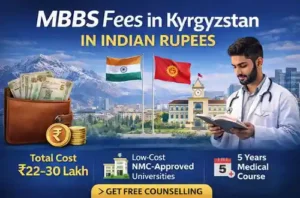
MBBS Fees in Kyrgyzstan in Indian Rupees (2026 Cost Guide)
MBBS Fees in Kyrgyzstan in Indian Rupees (2026 Cost Guide) Blogs ... -
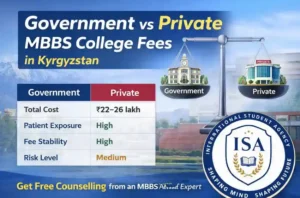
Government vs Private MBBS Fees in Kyrgyzstan – Detailed Comparison
Government vs Private College Fees Government vs Private College Fees Blogs ... -
Year-Wise MBBS Fee Structure in Kyrgyzstan (2026 Guide)
Year-Wise MBBS Fee Structure in Kyrgyzstan (2026 Guide) Blogs About Us Year-wise... -
MBBS Fees in Kyrgyzstan 2026 – Total Cost & Fees in Rupees
Does NMC Recognize Georgian Medical Universities? Complete Truth for Indian Students... -
Does NMC Recognize Georgian Medical Universities? Complete Truth (2026)
Does NMC Recognize Georgian Medical Universities? Complete Truth for Indian Students... -
How to Check NMC Compliance of Georgian Medical Universities (2026 Guide)
Will My MBBS Degree from Abroad Be Valid in India? (2026...